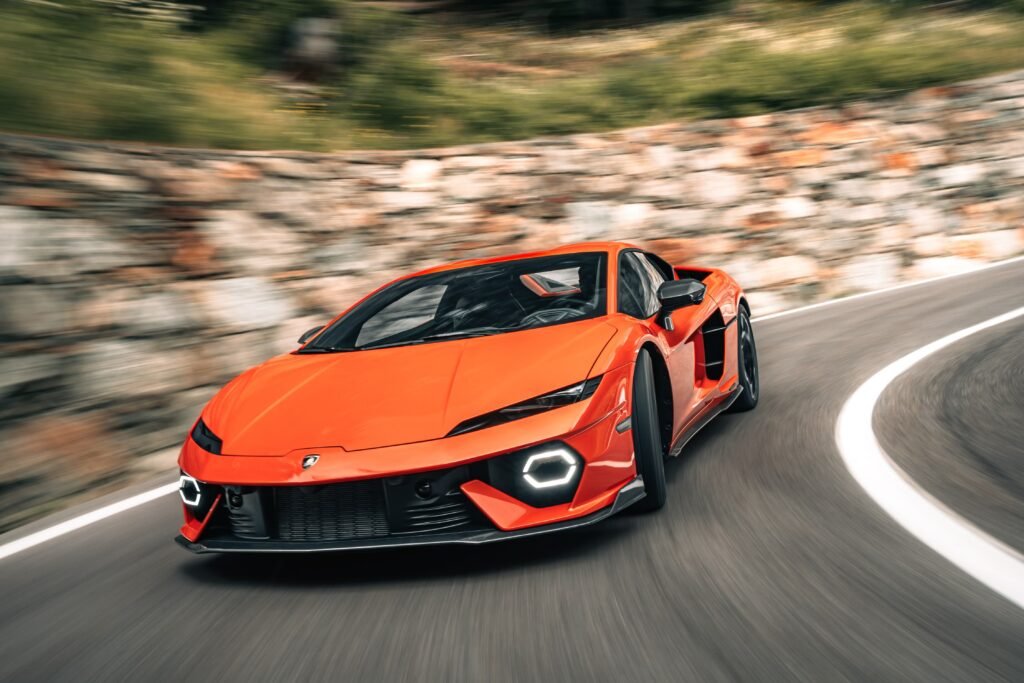

2027 Lamborghini Temerario Review: The V10’s Successor Finds Its Voice
Replacing the Huracán was never going to be simple, and Lamborghini knew it. The naturally aspirated V10 defined an entire generation of “entry-level” Lamborghinis, so the Temerario arrives carrying enormous expectations. For 2027, the hybrid V8 supercar carries over largely unchanged from its debut, while a new Spyder variant joins the lineup for buyers who want the theater of open-top driving to go with the drama under the rear glass.
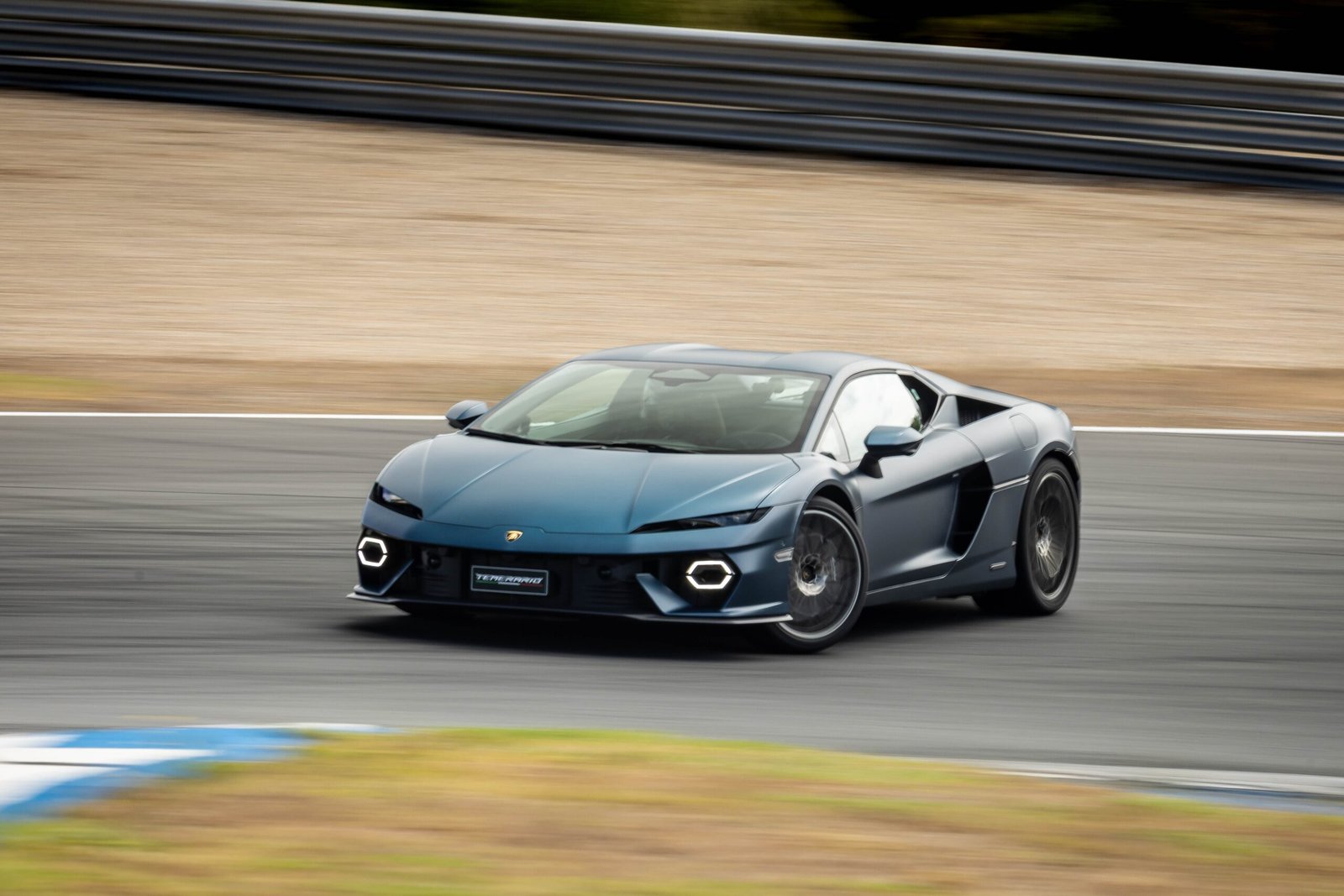
Table of Contents
- Overview
- Exterior Design
- Interior and Technology
- Engine and Hybrid Powertrain
- Horsepower and Torque
- Performance
- Chassis and Handling
- Braking and Suspension
- Pricing and Trims
- The New Spyder Variant
- Competitors
- Pros and Cons
- Final Verdict
Overview
The 2027 Lamborghini Temerario is a mid-engine plug-in hybrid supercar that replaces the Huracán as Lamborghini’s entry point into the lineup, sitting beneath the flagship V12 hybrid Revuelto. It’s the second model in Lamborghini’s High-Performance Electrified Vehicle range and marks the brand’s full transition to a hybridized lineup. Built on a bespoke platform at the Sant’Agata Bolognese factory in Italy, the Temerario pairs an all-new twin-turbo V8 with three electric motors, and for 2027 the range expands with a new Spyder body style.
Exterior Design
The Temerario carries Lamborghini’s “Essential and Iconic” design language, keeping the brand’s signature wedge shape while adding functional aerodynamic elements that Lamborghini says produce 158 percent more rear downforce than the outgoing Huracán Evo. Hexagonal daytime running lights double as air intakes for the cooling system, a detail that blends styling with genuine function, and a functional rear spoiler and exposed engine cover reinforce the car’s motorsport-inspired design. The Temerario also retains Lamborghini’s dramatic scissor-door tradition, a signature touch carried over from generations of Sant’Agata supercars before it.
Interior and Technology
Lamborghini describes the Temerario’s cabin as designed to make occupants “feel like a pilot,” with a redesigned layout that offers noticeably more roominess than the outgoing Huracán. The center tunnel houses Lamborghini’s iconic fighter-jet-style starter button and e-gear selector, while the sculpted steering wheel integrates rotors for drive mode and hybrid mode selection. New for this generation is the Lamborghini Vision Unit, an onboard camera system that enables dashcam functionality, automatic recording of driving sessions, and Lamborghini Telemetry 2.0, which captures vehicle data, lap times, and driver inputs for review in the car or through the Lamborghini Unica app. Standard equipment includes power-adjustable heated and ventilated front seats, dual-zone automatic climate control, and ambient interior lighting, while a passenger display is available for co-drivers who want to follow along with performance data.
Engine and Hybrid Powertrain
At the center of the Temerario is an all-new 4.0-liter twin-turbocharged V8, using a flat-plane, hot-vee layout with the turbochargers packaged within the cylinder banks for a more compact design and sharper throttle response. Titanium connecting rods and a short-stroke design allow the engine to safely rev to a remarkable 10,250 rpm redline, making the Temerario the first Lamborghini engine to reliably spin past 10,000 rpm. A rear-mounted electric motor sits between the engine and the transmission, while two additional axial-flux electric motors on the front axle handle torque vectoring and all-wheel-drive traction.
Horsepower and Torque
The V8 alone produces 789 horsepower and 538 lb-ft of torque, with peak power arriving between 9,000 and 9,750 rpm. The rear-mounted electric motor adds a further 148 horsepower, and together with the front-axle motors, Lamborghini quotes a combined system output of 907 to 920 horsepower depending on measurement standard, making the Temerario the most powerful car in its class among hybrid V8 rivals.
Performance
Independent testing has clocked the Temerario at 0-60 mph in roughly 2.7 seconds, with an electronically limited top speed of around 213 mph. Despite weighing approximately 4,000 pounds, a genuine increase over the outgoing V10 Huracán due to its hybrid hardware, the Temerario maintains a remarkably responsive feel on twisty roads, with the added instant torque from its electric motors filling in any gaps while the turbochargers spool up to full boost.
Chassis and Handling
The Temerario rides on an entirely new aluminum spaceframe chassis, which Lamborghini says increases torsional rigidity by 20 percent over its predecessor. The active suspension system can transition from a relatively compliant “Città,” or city, mode to the stiffer, track-focused “Corsa” setting, giving the car genuine everyday usability alongside serious track capability. Reviewers have praised the electric front axle for adding stability and helping rotate the chassis through corners, though some note that outright steering feedback can feel somewhat muted compared to the sharpest rivals in the segment.
Braking and Suspension
Carbon-ceramic brakes with multi-piston calipers come standard across the Temerario lineup, and independent testing has recorded stopping distances that are solid but not class-leading, with some competitors managing shorter stops from higher speeds. Below 50 mph, however, the Temerario hauls down as quickly as the best cars in its class. An optional Alleggerita track package sheds additional weight through carbon fiber body panels, a larger rear wing, a titanium muffler, and lightweight carbon fiber wheels.
Pricing and Trims
Lamborghini’s official U.S. base pricing for the Temerario starts at roughly $357,000 to $390,000 before options, based on figures reported by outlets that have tested and reviewed the car. Heavily optioned examples, particularly those built through Lamborghini’s Ad Personam personalization program with extensive carbon fiber and bespoke trim, can climb well past $550,000. In the UK, list pricing has been reported from roughly £259,570 to £296,770 for core trims before options. Because Lamborghini pricing varies by market, specification, and available personalization packages, buyers should confirm exact figures with an authorized dealer.
The New Spyder Variant
For 2027, Lamborghini adds a Temerario Spyder to the lineup, bringing an open-top body style to the same twin-turbo hybrid V8 platform. Spyder variants traditionally carry a premium of roughly 10 to 20 percent over the equivalent coupe, which would put a U.S. Spyder starting price somewhere in the region of $430,000 to $450,000, though official pricing had not been fully confirmed at the time of writing. The Temerario platform has already been adapted into GT3 and Super Trofeo racing variants, and that motorsport development should carry over into the Spyder’s suspension calibration, braking hardware, and torque-vectoring tuning.
Competitors
The Temerario competes directly against the Ferrari 296 GTB and McLaren Artura, both of which use a similar twin-turbo V6 plug-in hybrid formula rather than a V8. Among this trio, the Temerario currently holds the outright horsepower advantage, though reviewers note the Ferrari and McLaren both offer sharper steering feedback in exchange for slightly less outright power. The Maserati MC20 and Porsche 911 Turbo S also draw cross-shopping interest from buyers considering this price bracket, even without matching the Temerario’s full hybrid powertrain.
Pros and Cons
Pros
- Segment-leading combined output of up to 920 horsepower from its hybrid V8 powertrain
- Remarkable 10,250-rpm redline delivers a genuinely unique engine character
- New Lamborghini Vision Unit adds genuinely useful onboard recording and telemetry tools
- New Spyder variant broadens the lineup for open-top buyers
Cons
- Meaningfully more expensive than the Huracán it replaces
- Heavier than its V10 predecessor due to added hybrid hardware
- Steering feedback can feel muted compared to some rivals
- Braking distances from high speed are solid but not class-leading
Final Verdict
The 2027 Lamborghini Temerario succeeds at the difficult task of replacing one of the most beloved engines in modern Lamborghini history. Trading the Huracán’s naturally aspirated V10 for a hybridized twin-turbo V8 was always going to divide purists, but the result is a faster, more usable, and genuinely more capable supercar, one that still delivers a distinct and thrilling character all its own. With the new Spyder variant now joining the lineup, the Temerario platform covers more ground than ever, giving buyers a compelling reason to consider it over its closest hybrid rivals.
Frequently Asked Questions
1. How much does the 2027 Lamborghini Temerario cost?

Reported U.S. base pricing for the Temerario coupe falls roughly between $357,000 and $390,000 before options, with heavily personalized examples through Lamborghini’s Ad Personam program reaching $550,000 or more. Exact 2027 pricing should be confirmed with an authorized dealer.
2. How much horsepower does the Lamborghini Temerario have?
Lamborghini quotes a combined output of up to 920 horsepower from the Temerario’s hybrid powertrain, made up of 789 horsepower from its twin-turbo V8 engine and roughly 148 horsepower from its rear electric motor, plus additional torque-vectoring power from two front-axle motors.
3. What is the top speed of the Lamborghini Temerario?
Independent testing has recorded an electronically limited top speed of approximately 213 mph, with 0-60 mph acceleration in roughly 2.7 seconds.
4. Is the Lamborghini Temerario available as a convertible?
Yes. For 2027, Lamborghini adds a Temerario Spyder to the lineup, bringing an open-top body style to the same hybrid V8 platform, with pricing expected to carry a premium of roughly 10 to 20 percent over the coupe.
5. How does the Lamborghini Temerario compare to the Ferrari 296 GTB?
Both are twin-turbo hybrid supercars, but the Temerario uses a V8 rather than the 296 GTB’s V6 and currently holds an outright horsepower advantage. Reviewers note the Ferrari offers sharper steering feedback, so the right choice often comes down to whether a buyer prioritizes outright power or outright driver feel.